

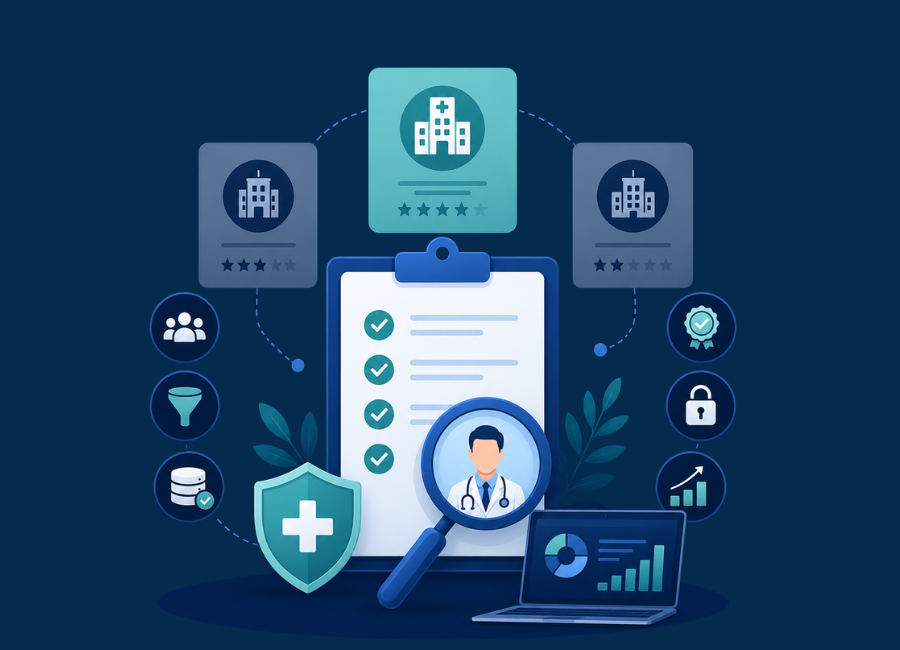
Choosing a Healthcare Data Provider is one of the most important decisions for organizations that rely on targeted outreach to hospitals, physician practices, healthcare executives, and other medical professionals. While many providers promise millions of contacts and high accuracy rates, not every database delivers the quality needed to support successful marketing and sales campaigns.
Poor-quality healthcare data often results in bounced emails, outdated contacts, low engagement, and wasted marketing budgets. On the other hand, a reliable Healthcare Data Provider helps businesses reach verified decision-makers, personalize outreach, and build stronger pipelines with confidence.
If you’re evaluating providers for the first time or considering switching from your current vendor, this guide will walk you through the key factors to consider before making a decision.
Why Choosing the Right Healthcare Data Provider Matters
Healthcare marketing depends on trust, precision, and relevance. Unlike mass-market industries, healthcare organizations have complex buying committees involving physicians, administrators, procurement teams, IT leaders, finance executives, and department heads.
Without accurate contact information, even the most creative campaigns struggle to generate meaningful engagement.
A dependable Healthcare Data Provider offers more than a list of email addresses. They deliver reliable Healthcare Contact Data that enables businesses to:
- Reach verified healthcare professionals.
- Improve campaign targeting.
- Personalize communication.
- Generate qualified healthcare leads.
- Increase marketing efficiency.
- Build long-term customer relationships.
The quality of your data directly influences the quality of your results.
1. Evaluate Data Accuracy Before Anything Else
The first question to ask any Healthcare Data Provider is how they verify their data.
Some vendors rely on outdated public directories or automated scraping techniques that quickly become inaccurate. Healthcare organizations frequently experience staffing changes, departmental restructuring, and role transitions, making regular validation essential.
Ask potential providers questions such as:
- How often is the database updated?
- How are email addresses verified?
- Is phone information validated?
- Are inactive contacts removed?
- Is there a documented verification process?
Providers that invest in continuous verification typically deliver significantly better campaign performance than those relying solely on periodic updates.
2. Look for Comprehensive Healthcare Contact Data
Every business has different targeting requirements. Some campaigns require physicians by specialty, while others focus on hospital executives, procurement professionals, or healthcare IT leaders.
A reliable Healthcare Data Provider should offer detailed Healthcare Contact Data that extends beyond basic contact information.
Look for databases that include:
- Full name
- Job title
- Department
- Medical specialty
- Organization name
- Business email
- Direct phone number
- Practice address
- State and country
- Organization size
- Healthcare facility type
- NPI (where applicable)
- Website
- Employee count
Rich data makes segmentation easier and allows marketers to deliver more relevant campaigns.

3. Prioritize Industry Compliance
Healthcare marketing operates within a regulated environment. While B2B communication differs from patient data management, businesses must still respect applicable privacy and marketing regulations.
Before selecting a Healthcare Data Provider, confirm that they maintain compliance with standards such as:
- HIPAA
- GDPR
- CAN-SPAM
- CASL
- CCPA
- ACMA
Providers should also be transparent about how their data is collected, maintained, and updated.
Compliance is not only about avoiding legal risks—it also reflects the provider’s commitment to ethical data practices.
4. Understand Their Segmentation Capabilities
By Specialty
- Cardiologists
- Orthopedic Surgeons
- Dentists
- Pediatricians
- Dermatologists
By Organization
- Hospitals
- Clinics
- Laboratories
- Imaging Centers
- Ambulatory Surgery Centers
By Geography
- Country
- State
- City
- ZIP Code
By Geography
- CEO
- CIO
- Procurement Manager
- Practice Administrator
- Nursing Director
- Medical Director
The more flexible the segmentation, the more personalized your outreach becomes.
5. Ask About Data Refresh Frequency
Healthcare data changes faster than many businesses realize.
- Doctors relocate.
- Hospitals merge.
- Executives change organizations.
- Departments restructure.
These changes happen every day, making outdated databases increasingly unreliable over time.
An experienced Healthcare Data Provider should have a defined schedule for refreshing and validating records.
Instead of asking whether the data is verified, ask how frequently verification takes place and whether inactive contacts are continuously removed.
Providers that regularly maintain their databases typically offer stronger deliverability and more consistent campaign performance.
6. Evaluate Customer Support and Customization
Every organization has unique targeting needs.
Some businesses may require physician specialists in specific states, while others need procurement leaders from large hospital systems.
A reputable Healthcare Data Provider should be willing to customize your database instead of offering only standard packages.
Look for providers that can tailor lists based on:
- Specialty
- Geography
- Facility type
- Employee size
- Revenue
- Job title
- Technology usage
The ability to customize your Healthcare Email List often makes the difference between a generic campaign and one that delivers qualified opportunities.
7. Watch for Red Flags Before Choosing a Healthcare Data Provider
Not every Healthcare Data Provider follows the same standards for data quality and verification. While attractive pricing and large contact counts may seem appealing, they don’t always translate into better marketing results.
Here are some warning signs to watch for before making a purchase:
- Unrealistically low prices for millions of contacts.
- No explanation of how the data is collected or verified.
- No information about update frequency.
- Limited segmentation options.
- No compliance information.
- No customer reviews or case studies.
- No data accuracy guarantee.
- Generic contact lists with little customization.
A trustworthy provider should be transparent about its data sources, verification process, and quality standards. If these details are difficult to find, it may be worth exploring other options.
8. Ask the Right Questions Before Buying
Before investing in a Healthcare Email Database, ask questions that help you evaluate the provider beyond marketing claims.
Some of the most important questions include:
- How is the data verified?
- How often is the database updated?
- Can I build a custom Healthcare Email List?
- What industries and healthcare organizations are covered?
- What compliance standards do you follow?
- What is your average data accuracy rate?
- How quickly can the data be delivered?
- Do you provide ongoing customer support?
The answers will give you a better understanding of the provider’s reliability and whether the database aligns with your marketing objectives.
Why More Businesses Choose MedicoLeads
Selecting a Healthcare Data Provider isn’t just about purchasing a database—it’s about partnering with a company that understands the complexities of healthcare marketing.
At MedicoLeads, we work with healthcare marketers, medical device manufacturers, pharmaceutical companies, healthcare SaaS providers, staffing firms, and consulting organizations that depend on accurate business contact data to grow their pipeline.
Instead of offering static contact lists, we focus on providing verified Healthcare Contact Data that supports targeted outreach and long-term marketing success.
Our database includes:
- Over 14 million healthcare contacts worldwide.
- More than 1.3 million verified physician contacts.
- 95% data accuracy backed by continuous validation.
- Over 40 contact and firmographic data points.
- Records refreshed every 45 days.
- Compliance with HIPAA, GDPR, CAN-SPAM, CCPA, CASL, and ACMA.
- Custom segmentation based on specialty, job title, geography, facility type, and organization size.
Whether your goal is promoting healthcare technology, medical devices, staffing solutions, or professional services, MedicoLeads helps you reach the right decision-makers with confidence.
Build a Long-Term Partnership, Not Just a Contact List
The relationship with your Healthcare Data Provider shouldn’t end after receiving a spreadsheet.
Healthcare markets continue to evolve, and your target audience changes along with them. Organizations grow, executives move into new roles, and new healthcare facilities open every year.
Working with a provider that continually updates and enriches Healthcare Contact Data helps your marketing and sales teams stay ahead of these changes.
A long-term partnership also gives you access to customized data recommendations, ongoing support, and the flexibility to scale campaigns as your business expands into new specialties or geographic markets.
A Quick Evaluation Checklist
Use this checklist before choosing your next Healthcare Data Provider.
| Evaluation Criteria | Yes / No |
|---|---|
|
Does the provider verify data regularly? |
☐ |
|
Is the data compliant with applicable regulations? |
☐ |
|
Can lists be customized? |
☐ |
|
Are multiple healthcare specialties available? |
☐ |
|
Does the provider offer firmographic data? |
☐ |
|
Is there a stated accuracy rate? |
☐ |
|
Are customer reviews or case studies available? |
☐ |
|
Is customer support available after purchase? |
☐ |
|
Are records refreshed frequently? |
☐ |
|
Can data be segmented by job title and geography? |
☐ |
If you answer “No” to several of these questions, it’s worth exploring alternative providers before making a decision.
Conclusion
The success of your healthcare marketing strategy depends heavily on the quality of the data you use. Choosing the right Healthcare Data Provider can improve targeting, increase campaign efficiency, and help your sales team connect with qualified healthcare decision-makers.
Rather than focusing only on the number of contacts available, evaluate providers based on data accuracy, verification methods, compliance, customization options, and ongoing support. A trusted partner will deliver more than contact information—they’ll provide the reliable data foundation needed to support sustainable business growth.
By investing in verified Healthcare Contact Data and following best practices for segmentation and personalization, your organization can create more relevant campaigns, generate stronger engagement, and maximize long-term marketing ROI.
FAQs
What is a Healthcare Data Provider?
How do I choose the best Healthcare Data Provider?
Why is Healthcare Contact Data important?
How often should healthcare databases be updated?
Healthcare databases should be refreshed regularly because healthcare organizations experience frequent staffing changes. Many leading providers update records every few weeks to maintain data quality.
Does MedicoLeads provide customized Healthcare Email Lists?
Yes. MedicoLeads offers customized Healthcare Email Lists based on specialty, geography, job title, organization type, and other firmographic criteria to support targeted B2B marketing campaigns.